

Written by Chyanss “Chance” Gish, WFVZ Bird Museum & Research Center, Membership Support Assistant
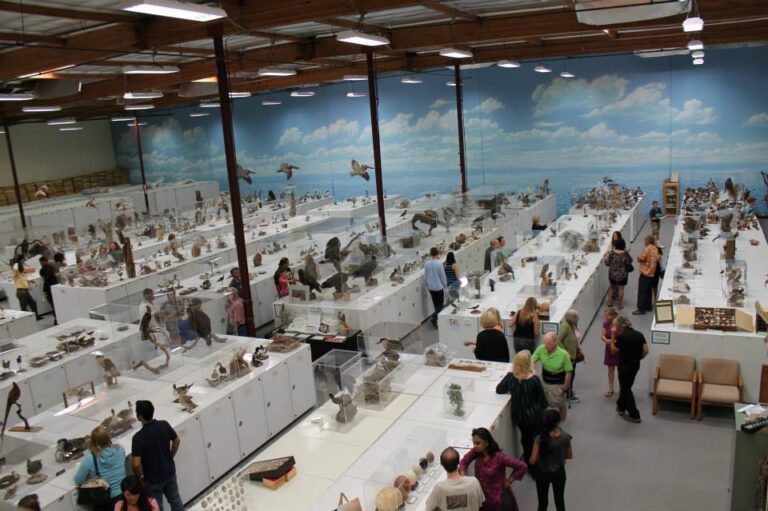
The WFVZ Bird Museum and Research Center is a hidden gem in California’s Conejo Valley, situated between Los Angeles and Santa Barbara. As the only natural history museum in Ventura County, visitors can marvel at one of the world’s largest collections of its kind: antique and modern egg and nest specimens collected in the wild, as well as taxidermy mounts and study skins of birds from all over the world. Now known more commonly as the “Camarillo Bird Museum”, this museum offers public visits, field trips, guided birding walks, educational labs and classes for novice birdwatchers, students, and professional biologists alike. The establishment has always been “A Place for People to Learn About Birds”, but its programs and efforts have shifted over time. The dedicated and humble staff of this non-profit, public charity is shifting gears in recent years to making this museum a well-known local attraction and community science center, as they continue conducting research in avian wildlife and conservation – the original mission of the organization. The Foundation is celebrating its 70th anniversary this year, and to this day, staff and visitors alike look back in awe at the story of how the Foundation became what it is today.
Ed N. Harrison, the WFVZ’s Founder, was a Los Angeles based collector who, across his lifetime, acquired a wide range of items of personal interest, ranging from antique spectacles, fossils and minerals, rare books and manuscripts, and art, to natural history specimens. A small structure behind his Brentwood Estate was the beginnings of the WFVZ, and housed what would later be moved into the Camarillo Bird Museum. There was a particular subset of his collection that held a special place in Harrison’s heart, his oology collection. Oology is the antique sport of collecting bird eggs, most popular in the 19th and early 20th centuries. This niche hobby of collecting and preserving bird eggs was widely acclaimed for showcasing the prestige, travels, and accomplishments of their collectors, but was eventually prohibited by law. Soon, the oology collections of many became obsolete, seen as relics of the past with no practical purpose. Harrison saw not only the cultural and historic value in preserving these collections, as an oologist himself, but also foresaw their value to conservation and the need for an establishment to safeguard these collections for future scientific endeavors.
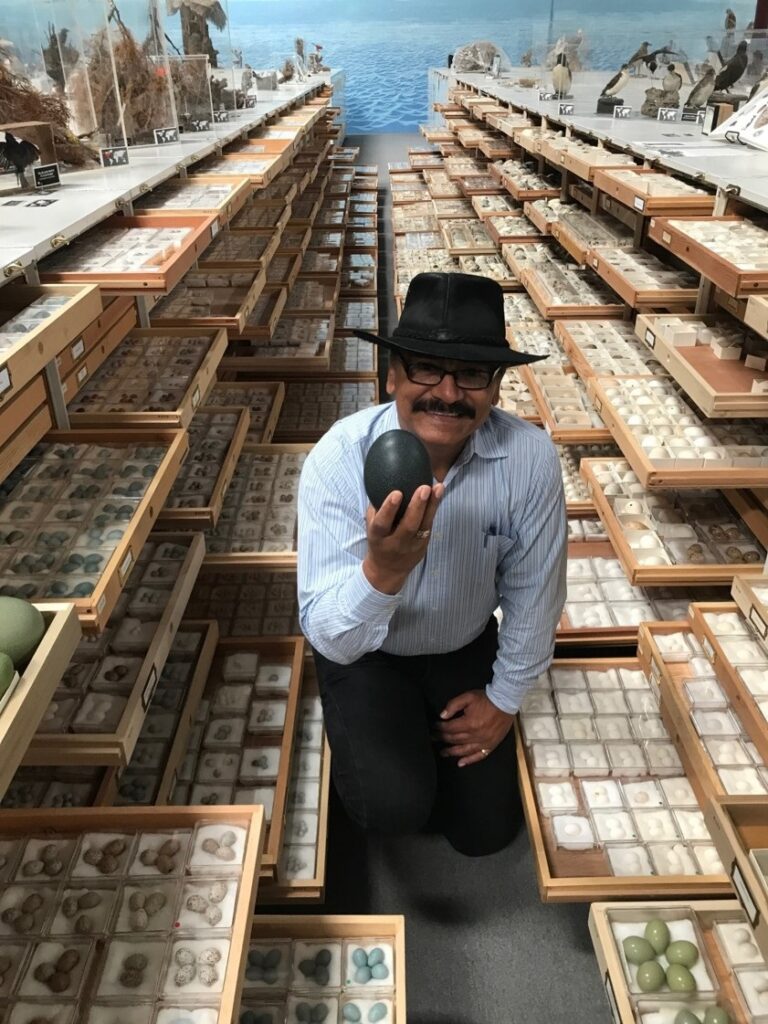
Harrison took it upon himself and his new foundation, the WFVZ, to acquire as many of these unwanted collections as possible. The first Director of the Foundation travelled across the country in search of egg collections and other materials such as correspondence between collectors, biologists, other oologists, and explorers more broadly. Harrison was known to tell stories of being in the right place at the right time, overhearing strangers in an airport bar on a layover discussing the disposal of undesired egg and nest specimens, and offering to take it off their hands then and there. What began as a passion project in his backyard, turned into a sum of collections big enough to fit into a 20,000-square-foot space in Camarillo, where the WFVZ remains to this day. In total, the WFVZ houses more than one million eggs. It is the largest collection in the world, “tied” with the egg collection of the British Museum of Natural History.
Before coming to Camarillo, Ed found his protegé, René Corado, a Guatemalan immigrant who had discovered the field of biology and oology almost by accident. Harrison helped Corado attend school and earn his credentials in becoming a biologist himself, and eventually sent him on dangerous expeditions to gather eggs in remote locations of the Amazon Rainforest. Despite the grueling hardships of this work, Corado refers to Harrison as his American father, and is extremely sentimental about the life’s work of his mentor. At present, Corado has been with the Foundation for more than forty years and is the Collections Manager of the museum. An indispensable piece of the WFVZ, Corado’s mastery of his craft has resulted in the catapulting of the museum’s modern successes. His efforts spearheaded the relocation of the Foundation to Camarillo, without breaking a single egg. To this day, Corado, alongside other taxidermists, continues to preserve the continuous flow of birds that come through the museum, meticulously cataloging data such as cause of death, intestinal contents, and other important information that can be used by future researchers. With a National Science Foundation grant awarded to the Museum’s Executive Director and lead scientist, Dr. Linnea Hall, they successfully digitized the Foundation’s entire collection to online archives, making the WFVZ accessible to artists, researchers, and enthusiasts from all over the world. Because of this, international studies can access the data from the Foundation to enhance their work.
The WFVZ’s Collections have international importance, not just as a repository for specimens of these kinds, but also in what their collections data can showcase across nearly one hundred plus years. Most notably, eggs from the WFVZ were used in historic court cases which proved that the use of DDT was resulting in the thinning of eggshells in birds like the Peregrine Falcon and Brown Pelican over time. Foundation scientists were part of recovery programs which helped the Peregrine Falcon recover in Southern California’s urban landscape, removing thinned and precious eggs from nests, replacing them with identical false eggs, incubating them, and returning them to the nest undiscovered. Harrison spent a significant amount of hours photographing California Condors in the wild, and the WFVZ was a proud partner to the California Condor Recovery Program following the disastrous effect of DDT. In more recent times, researchers studying the effects of climate change and the resulting change in bird morphology are using Collections Data for regional birds to test their hypothesis: that specific birds are evolving longer wingspans to compensate for the fact that they have to fly longer distances to forage for food.
The trajectory of the WFVZ’s work changed a lot when Linnea Hall walked through its doors to volunteer her time. Before 2002, when Hall took on the role of Executive Director, the Foundation’s collections were primarily for scientific researchers. Hall is an expert ornithologist, field biologist, and educator, and recognized the missed opportunities of not sharing the unique Collections of the WFVZ with the public. Because of her commitment to accessible education, citizen science, and the stewardship of the future scientists of the world, Hall has crafted a public institution that helps people fly high into the incredible world of birds. The Foundation now boasts a Membership program with more than 150 active Members, scholarships to bring students to the museum for free field trips, lending programs that allow schools to borrow museum specimens, annual classes for professional biologists, and beginner friendly excursions that teach beginner and advanced birdwatchers best practices for birdwatching in Ventura County and surrounding areas. Her devotion to the WFVZ is not limited to access alone, as Hall is the Senior Conservation Biologist for the Foundation. Along with Corado and other staff biologists, Hall has taught her staff and other biologists to conduct various research projects alongside organizations like the U.S. Fish and Wildlife Service and The Nature Conservancy for more than twenty years.
The WFVZ was initiated as a non-profit organization in 1956. Perhaps the biggest difference of all is the ability for the public to come and view the magnificent and historic Collections that honor the stories of the collectors and people who made it what it is today. Whether you are a bird lover, museum-goer, researcher, artist, or oddities enthusiast, you may find one of the most unique experiences waiting for you in Camarillo at the WFVZ Bird Museum. Curious visitors can plan a visit to this egg-citing establishment using their website (wfvz.org) for appointments, or by attending one of the museum’s recurring weekend events like Open Houses and Self-Guided Saturdays. The WFVZ was made possible by people from wildly different backgrounds, each with their own unique story to tell, but is centered around the common goals and passions of conserving wild birds, preserving history, and stewarding community education and future careers in STEM and Museum Science. Their Flock is growing by the day, with birding enthusiasts, museum lovers, students, the current and future scientists of the world, explorers, photographers, falconers, archivists, and so much more, and they look forward to welcoming you to their museum on your next visit to Camarillo!
