

The Lumberjacks of the High Sierra
Beavers, Golden Aspens, and Nature’s Balancing Act — Are They Helping or Hurting the Forest?
There’s something magical about the high Sierra Nevada mountains in autumn. The air turns crisp, the mountains take on that unmistakable fall personality, and the quaking aspens put on a show that would make a Hollywood producer jealous. Golden leaves shimmer against dark green pines, mountain streams gurgle through grassy meadows, and every bend in the road offers another reason to stop the rig and grab the camera.
But sometimes, when you wander off the beaten path, you discover that nature has been up to something you weren’t expecting.
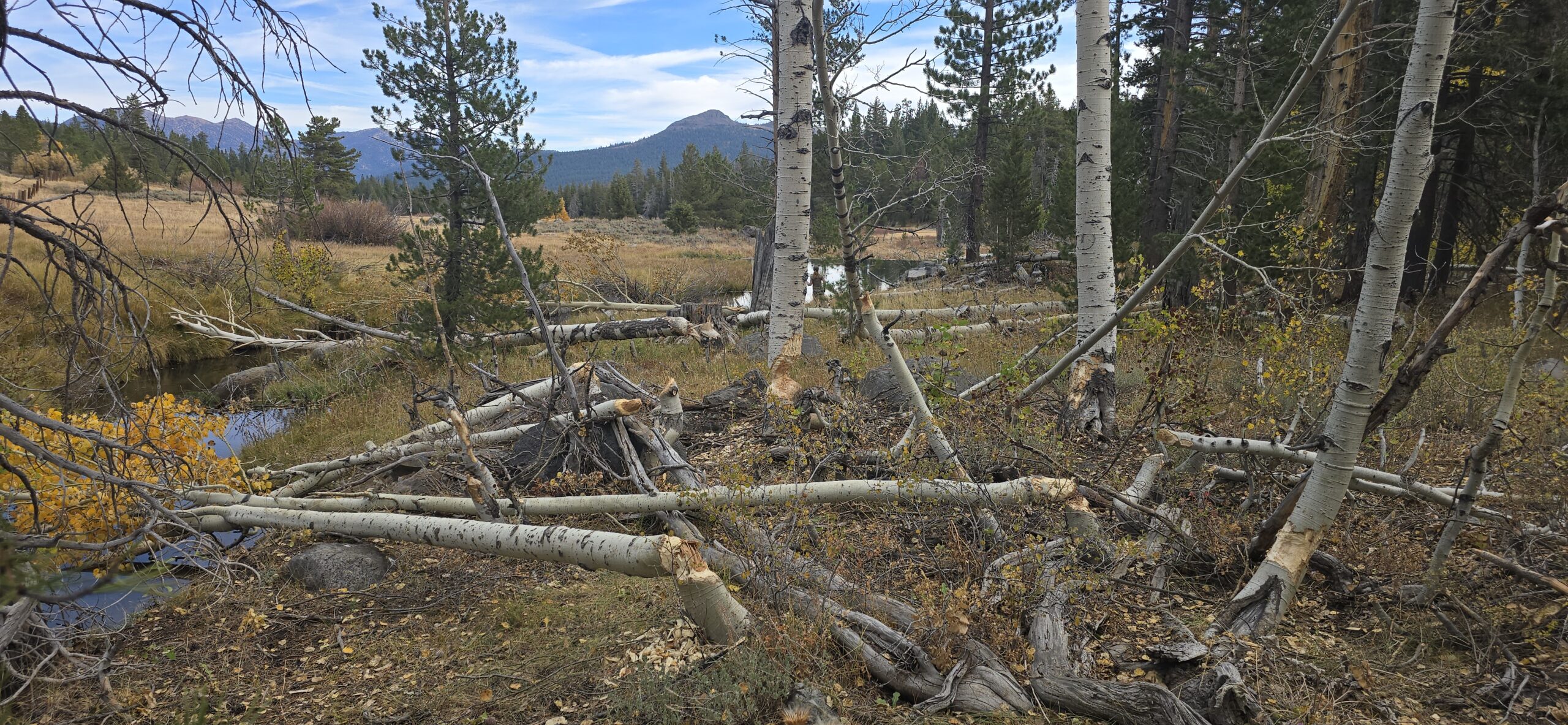
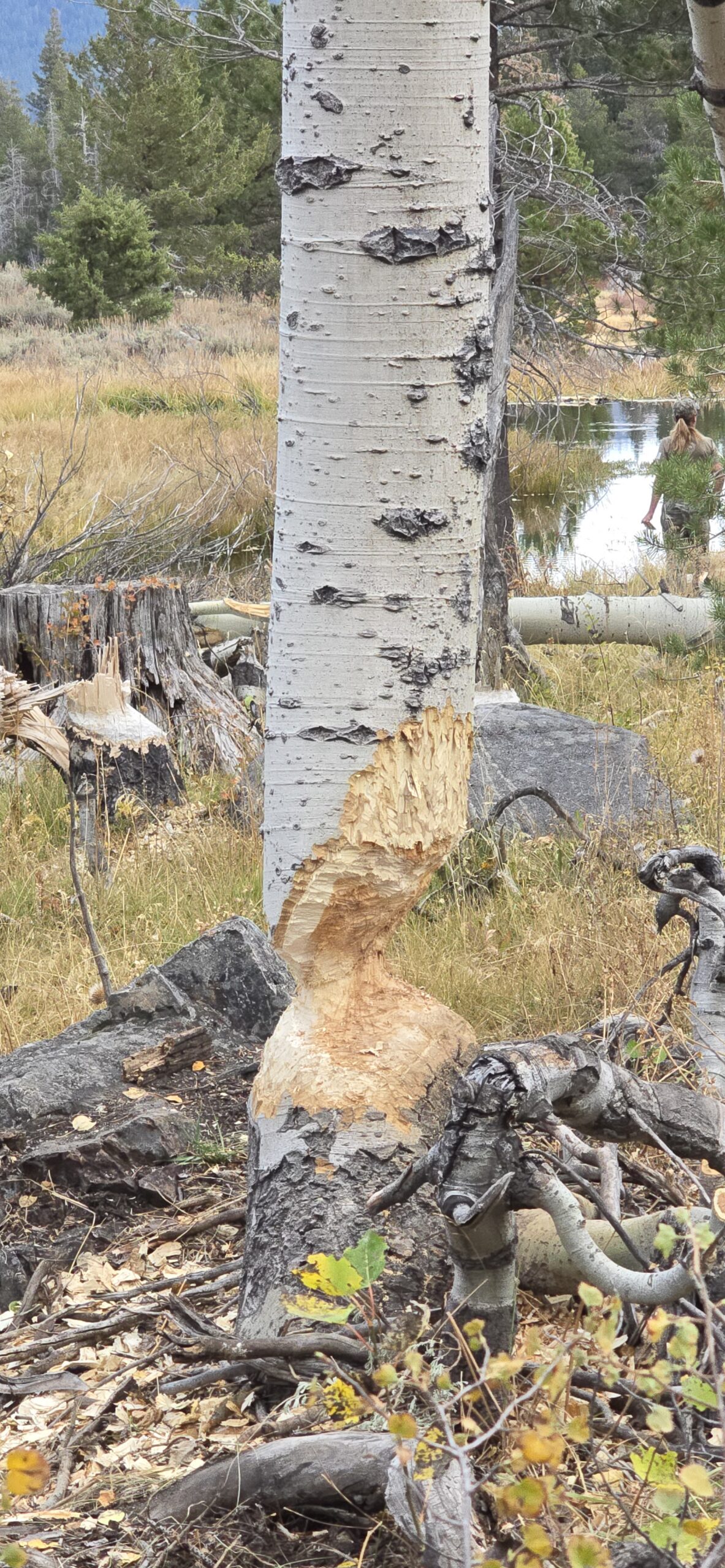
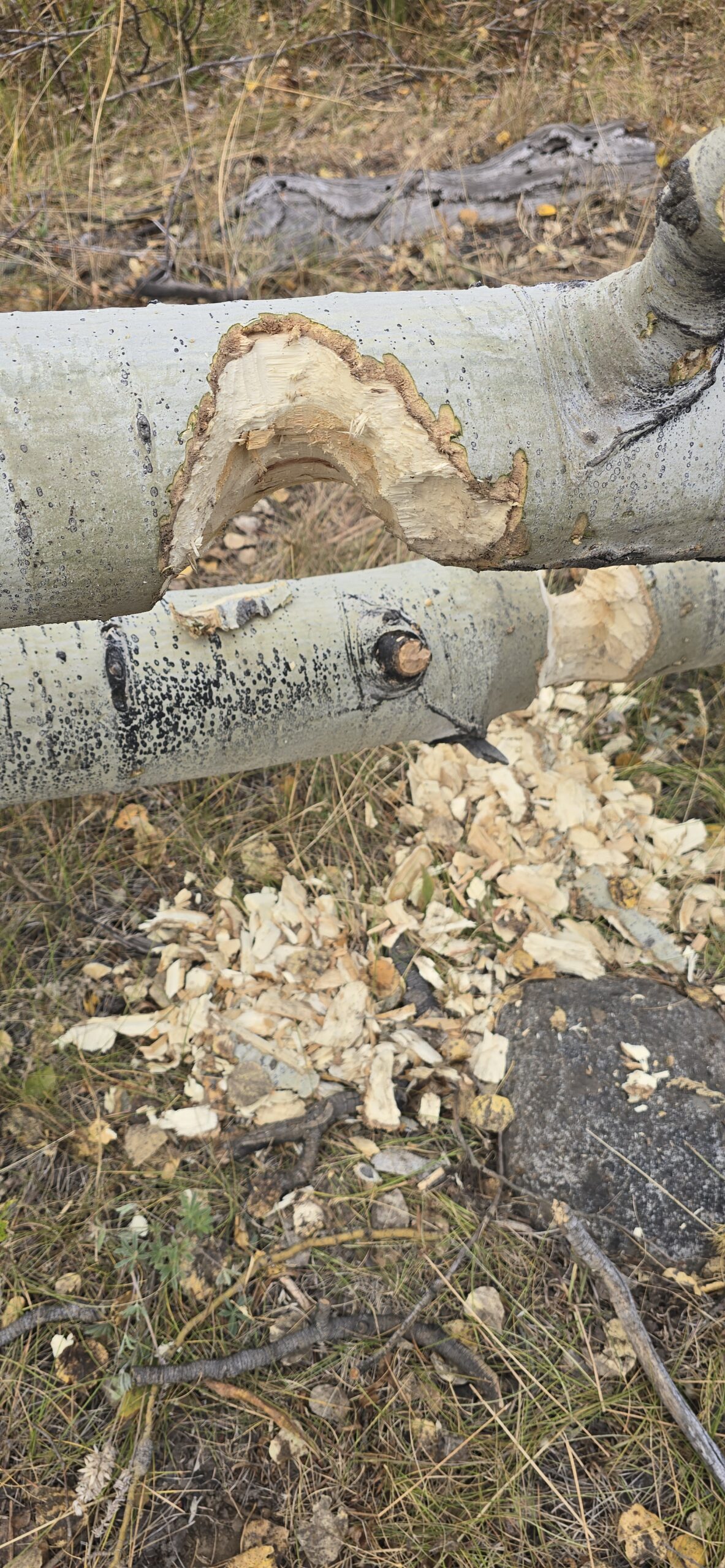
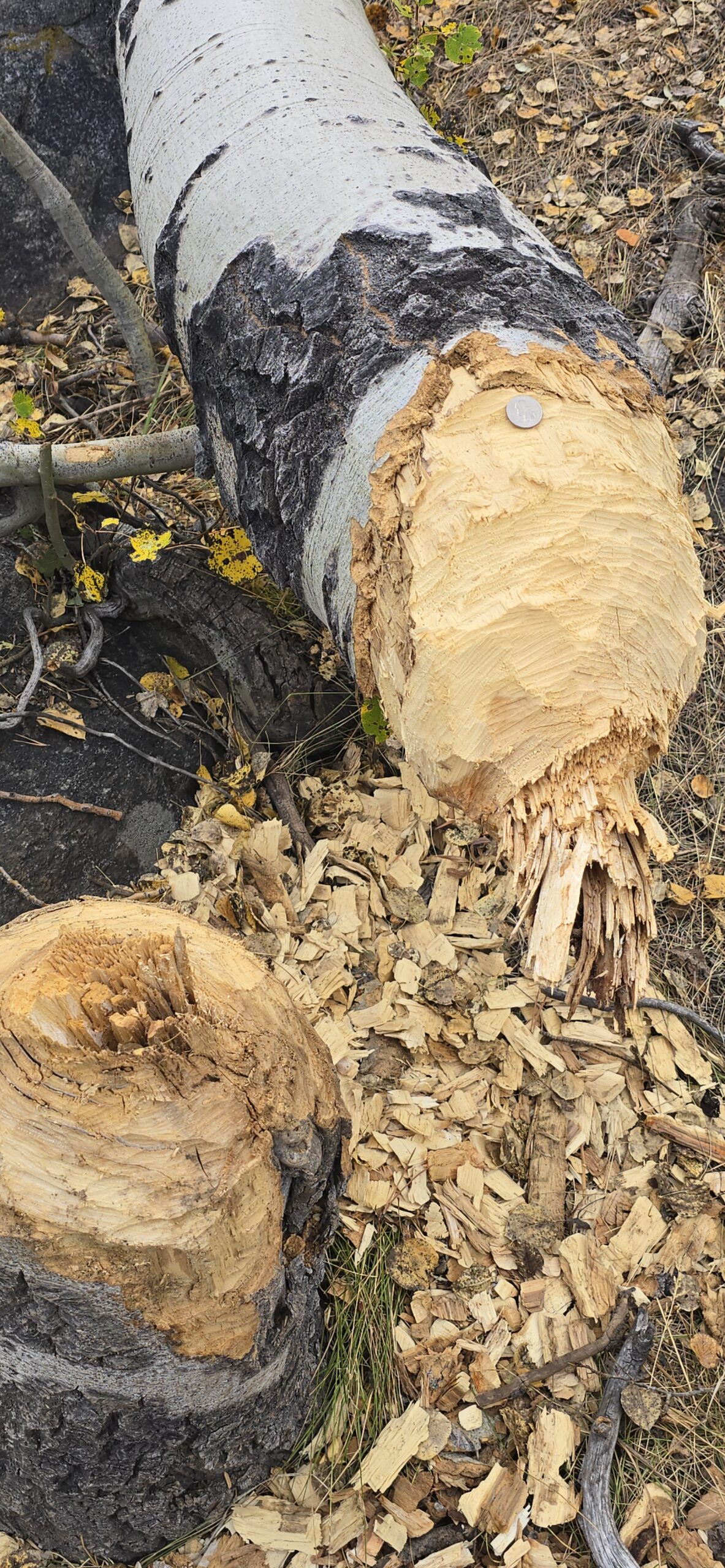
During a recent fall colors adventure that included a swing through Hope Valley, along California’s Highway 88, Stacie (wife) and I came across what looked like the aftermath of a small logging operation. Aspen trees were scattered across the ground, some freshly fallen, others apparently down for quite a while. Wood chips littered the forest floor, and several standing trees had been chewed nearly in half. At first, we were disheartened at the mess in this beautiful grove.
No chainsaws. No logging trucks. No hard hats. Just beavers. And judging by the evidence, these furry little lumberjacks had been working overtime.
A Beaver Doesn’t Need a Chainsaw
Most folks associate beavers with dams, ponds, and those picturesque little lodges we occasionally see along mountain streams. But these industrious rodents have another side. They are accomplished tree cutters, equipped with powerful jaws and continuously growing front teeth that make short work of surprisingly large trees.
One of their favorite menu items is the quaking aspen, sometimes called a trembling poplar (populus tremulodies). But here’s something I didn’t realize until I started digging into the science behind those fallen trees. Beavers aren’t simply cutting aspens for construction materials. They’re also after the groceries!
They eat aspen leaves, tender shoots, twigs, buds, and especially the nutritious inner bark and cambium just beneath the outer bark. And because much of that tender growth is high overhead, sometimes the easiest way to reach dinner is to cut down the entire tree.
Imagine dropping a 40-foot aspen just to get at the good stuff near the top!
In my research on various USFS websites, I discovered that during warmer months, beavers enjoy green vegetation and aquatic plants. But as fall arrives and winter approaches, woody foods become increasingly important. They cut branches, haul them to the water, and may stash them underwater near their lodges for winter meals.
So those piles of freshly cut aspens we discovered in Hope Valley weren’t necessarily the aftermath of a dam-building project. They may have been evidence of a beaver family stocking its winter pantry. Pretty clever for an animal without a refrigerator!
But standing among those fallen aspens, we couldn’t help wondering whether these industrious critters were doing more harm than good.
Are Beavers Destroying Our Beautiful Aspen Forests?
At first glance, the answer seems obvious. A healthy-looking aspen grove has lost numerous mature trees. Some have been completely felled, others partially chewed, and still others appear destined for the same fate.
It certainly looks destructive. But here’s where nature throws us a curveball. Aspens are unusual trees. What looks like a grove of individual trees may actually be a family of genetically identical stems connected underground by an extensive common root system. Scientists call this a clone.
And here’s another little surprise. Some naturalists consider these aspen colonies among the largest trees on Earth. Not because any individual trunk rivals our magnificent California redwoods or giant sequoias, but because an entire grove can actually be one living organism.
In Utah’s Fishlake National Forest, a remarkable aspen colony named Pando covers approximately 106 acres, contains an estimated 47,000 trunks, and weighs roughly 6,000 metric tons. All those trees are genetically identical parts of one enormous underground root system.
Imagine that! An entire forest that is technically one tree.
Not every aspen grove is a single clone, of course. But it certainly gives you a different perspective when you see a beaver chewing through one of those beautiful white trunks.
And here’s the really interesting part: When an aspen is cut down, the surviving root system can respond by sending up new shoots, called suckers. Given adequate sunlight, moisture, and protection from excessive browsing, those shoots can eventually become another generation of aspens.
So while the beaver may kill an individual tree, it doesn’t necessarily kill the aspen grove. Nature has a remarkable way of recycling itself.
The Other Side of the Beaver Story
Now, before we nominate every beaver for Forest Manager of the Year, there’s another consideration. Too much of a good thing can become a problem. If beavers repeatedly cut young aspens before they mature, a grove can struggle to replace itself. Deer, elk, and livestock browsing may compound the problem. And when beaver dams flood an area for extended periods, saturated soils can kill aspen roots and change the vegetation entirely. Talk about a mixed message!
But those same beavers are also doing something rather extraordinary. Their dams slow flowing water, create ponds and wetlands, trap sediment, and help retain moisture in mountain meadows. That water supports everything from fish and amphibians to birds, insects, and mammals.
In a Sierra Nevada landscape where summer drought and wildfire are constant concerns, wetlands and green riparian corridors can be especially valuable. The beaver may be taking down trees while helping create conditions that support an entirely different collection of plants and animals.
One animal. Two very different impacts. And both are part of the natural world.
A Little Mystery in Hope Valley
One of my photographs shows a standing aspen with black protective material wrapped around its lower trunk. Someone apparently decided that particular tree deserved a fighting chance against the local lumberjacks. The beavers had not touched the plastic-wrapped trunks.
Nearby, however, several other aspens had already lost the battle. It was an interesting contrast. On one side, human efforts to preserve a tree. On the other, beavers doing what beavers have done for thousands of years. Maybe the real question isn’t whether beavers are destructive. Clearly, they can be. Perhaps the better question is whether we’re looking at destruction or simply change. And nature is very good at change.
There’s More to Fall Colors Than Pretty Leaves
Most of us head into the Eastern Sierra and California’s high mountain country during autumn to enjoy the spectacular colors. We photograph golden aspens, explore backroads, admire mountain scenery, and occasionally find a quiet place to sit and appreciate the world around us.
But the more time I spend in these mountains, the more I realize that some of the best discoveries aren’t necessarily the prettiest things we see. Sometimes they’re the unusual things like a tree chewed nearly in half. A pile of fresh wood chips beside a creek. A beaver dam quietly holding back water in a mountain meadow.
These are all little clues that tell a much bigger story. And perhaps that’s one of the greatest rewards of getting outdoors. There’s always something new to discover, even in places we’ve visited many times before.
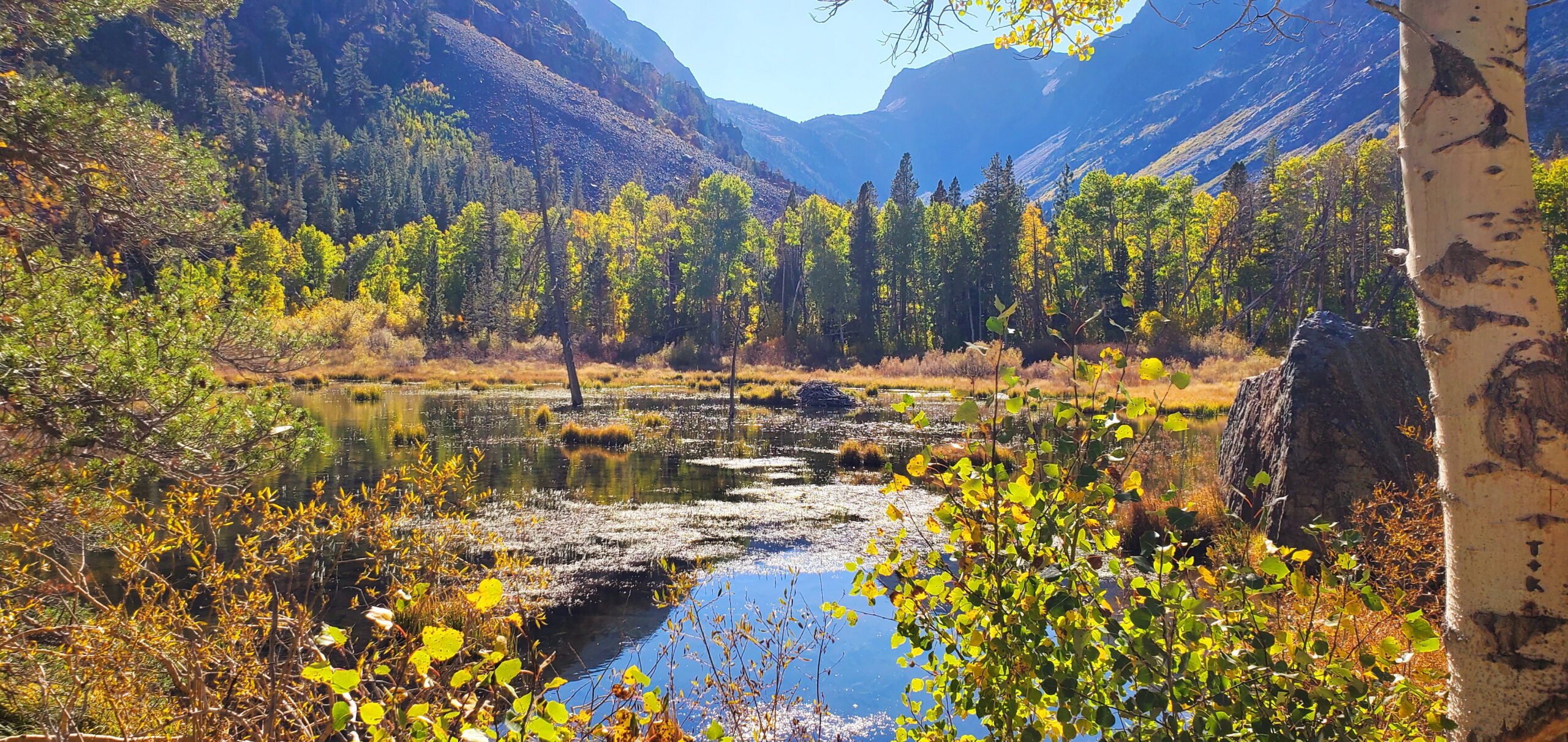
As for those busy beavers in Hope Valley (and Lundy Canyon in the featured image), I’m inclined to give them a little credit. They’re certainly not concerned about fall colors, scenic photography, or whether their handiwork meets our expectations of a beautiful forest. They’re just making a living, preparing for winter, and reshaping their little corner of the mountains. No permits. No blueprints. No environmental impact statements. Just a pair of sharp teeth and a whole lot of determination.
And somewhere beneath those fallen golden aspens, the roots may already be preparing next year’s comeback.
That’s nature for you. There’s usually more to the story than meets the eye.
— Del Albright, www.delalbright.com
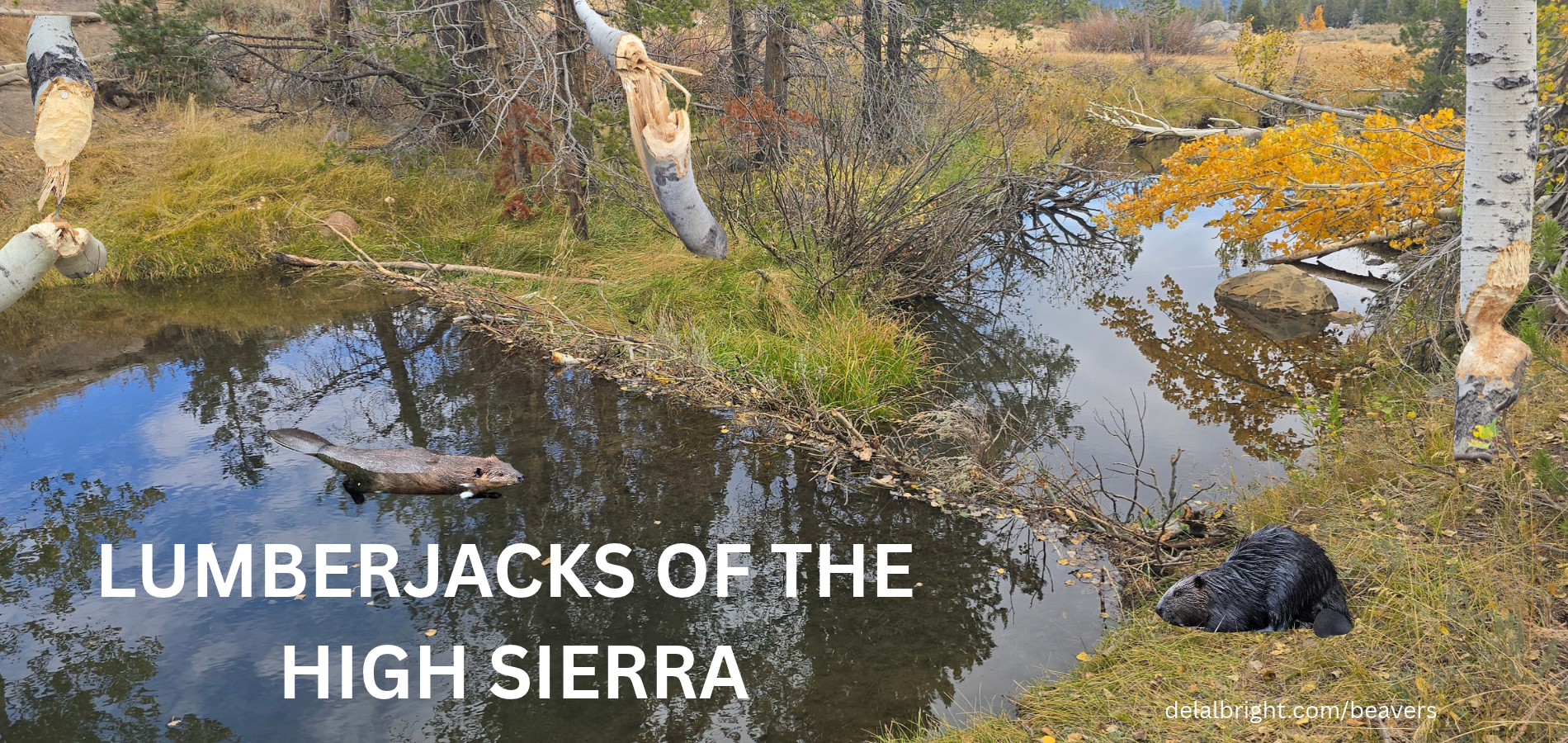
Author’s note: The beaver activity and aspen photographs accompanying this story were documented in Hope Valley, California, during an October fall colors adventure. Beaver impacts vary with local conditions, and not every cut aspen grove successfully regenerates. The featured image is a composite photo illustration using an actual beaver pond scene from Hope Valley.
